Mold Remediation & Mold Removal in Baton Rouge, LA
When mold contamination affects a home or commercial property, successful remediation involves more than spraying the visible area or covering it with paint. The source of moisture must be addressed, affected materials must be properly cleaned or removed, and the work area must be managed to help prevent contamination from spreading to unaffected parts of the building.
United Fire & Water provides professional mold remediation and mold removal services in Baton Rouge and throughout Greater Baton Rouge for residential and commercial properties.
As a Louisiana-licensed mold remediation contractor, our team has extensive experience with mold contamination related to plumbing leaks, roof leaks, flooding, HVAC moisture, hidden water damage, and other moisture-related building problems.
Need Professional Mold Remediation?
If mold has been identified in your property or you have been provided with an assessment or remediation protocol, contact United Fire & Water to discuss the project.
Call 225-401-6568 Request Mold RemediationWhat Is Mold Remediation?
Mold remediation is the process of addressing mold-contaminated building materials and the conditions contributing to the problem.
Depending on the property and scope of work, remediation may involve establishing containment, controlling airborne particles, removing contaminated porous materials, cleaning remaining structural surfaces, operating HEPA-filtered equipment, and correcting or addressing the moisture conditions associated with the mold growth.
The objective is not simply to make visible mold disappear. The objective is to properly address contaminated materials while protecting unaffected portions of the property.
Mold Removal vs. Mold Remediation
Homeowners frequently search for mold removal, while restoration professionals typically use the term mold remediation.
The terms are often used interchangeably, but remediation is the more complete description of the process.
It may include:
- Identifying the affected work area
- Addressing the source of water or moisture
- Establishing containment when appropriate
- Using HEPA-filtered air filtration equipment
- Removing contaminated porous materials when necessary
- Cleaning salvageable structural materials
- HEPA vacuuming and detailed cleaning
- Managing contaminated debris
- Drying affected building materials
- Preparing the area for post-remediation evaluation when required
Why Moisture Control Matters
Mold problems are closely connected to moisture.
If the water source is not corrected, cleaning mold without addressing the moisture problem may allow the conditions that caused the mold growth to continue.
Common moisture sources include:
- Plumbing leaks
- Broken or leaking supply lines
- Roof leaks
- Air-conditioning and HVAC condensation
- Water heater failures
- Dishwasher and washing machine leaks
- Shower, tub, sink, and toilet leaks
- Water beneath flooring
- Exterior water intrusion
- Storm damage
- Flooding
- Excessive indoor humidity
United Fire & Water's extensive experience with water damage restoration and structural drying is especially valuable when mold contamination developed because of a building leak or previous water loss.
Signs a Property May Require Mold Remediation
Visible Mold Growth
Mold growth affecting drywall, wood, cabinets, flooring, ceilings, framing, or other building materials may require professional remediation depending on the extent and conditions involved.
Mold After Water Damage
Water that remains inside walls, beneath flooring, or in other building materials can create conditions that support mold growth after the original leak or water loss.
Recurring Mold
When mold repeatedly returns after surface cleaning, an unresolved moisture source or contamination within building materials may be contributing to the problem.
Hidden Contamination
Mold-related damage may sometimes extend behind drywall, underneath flooring, inside cabinets, above ceilings, or into other concealed building areas affected by moisture.
Our Mold Remediation Process
1. Review the Remediation Scope
The remediation process begins by understanding the affected areas and the scope of work to be performed. When an independent assessment or remediation protocol has been prepared, the project can be planned around that information.
2. Address the Moisture Source
The water or moisture condition contributing to the mold problem must be corrected or otherwise addressed as part of the overall restoration process.
3. Establish Containment
When appropriate for the project, containment barriers are installed to separate the remediation work area from unaffected portions of the building.
4. Establish Air Filtration
HEPA-filtered air filtration or negative-air equipment may be used to help control airborne particles within the work area.
5. Remove Unsalvageable Materials
Mold-contaminated porous materials that cannot be effectively cleaned may require removal. This can include materials such as drywall, insulation, carpet, padding, or other affected components depending on the project.
6. Clean Remaining Materials
Salvageable structural surfaces can be cleaned using appropriate methods based on the materials involved and the conditions present.
7. HEPA Vacuum & Detail Clean
The work area is carefully cleaned to remove settled dust and debris generated during the remediation process.
8. Dry the Structure
When excess moisture is present, professional drying equipment may be used to return affected materials to appropriate moisture conditions.
9. Complete the Remediation Work
After remediation activities are complete, the area can proceed to any required post-remediation evaluation and, when necessary, repairs or reconstruction.
Containment Helps Prevent Cross-Contamination
One of the most important considerations during a mold-remediation project is preventing dust and contaminated material from being unnecessarily distributed into unaffected areas.
Depending on the size and conditions of the project, containment may include:
- Polyethylene containment barriers
- Sealed work areas
- Controlled entry and exit points
- Negative-air pressure
- HEPA-filtered air filtration devices
- Properly bagged or wrapped contaminated debris
- HEPA vacuuming
- Detailed cleaning of the work area
Some Mold-Damaged Materials May Need to Be Removed
Not every material affected by mold must automatically be discarded.
Hard, non-porous or semi-porous materials may sometimes be cleanable depending on their condition and the scope of the project.
Other porous materials can be difficult to clean effectively once mold contamination has penetrated the material. Depending on the project, removal may be appropriate for items such as:
- Drywall
- Insulation
- Carpet padding
- Some ceiling materials
- Certain engineered wood products
- Other porous building materials that cannot be effectively cleaned
Mold Remediation After Water Damage
Many mold-remediation projects begin with a water problem.
A plumbing leak may occur behind a wall. A roof may leak into an attic or ceiling cavity. An air-conditioning system may produce excessive condensation. A dishwasher, washing machine, water heater, or refrigerator supply line may fail.
The obvious water may be cleaned up while moisture remains in surrounding building materials.
When mold develops after a water loss, United Fire & Water's experience in both water mitigation and mold remediation allows our team to understand the relationship between the original water source, affected materials, moisture conditions, drying, demolition, and the eventual restoration of the property.
Residential Mold Remediation
United Fire & Water provides professional mold remediation for homes and residential properties throughout Greater Baton Rouge.
Projects may involve mold contamination affecting:
- Bedrooms
- Bathrooms
- Kitchens
- Living areas
- Closets
- Attics
- Ceilings
- Walls
- Cabinetry
- Flooring
- Areas surrounding plumbing fixtures
- Areas affected by previous water damage
Commercial Mold Remediation
Commercial mold problems may involve larger areas, more complicated building systems, occupied spaces, business interruption concerns, or multiple affected rooms.
United Fire & Water provides mold remediation for commercial and institutional properties including:
- Office buildings
- Apartment and multifamily properties
- Retail properties
- Restaurants
- Schools and educational facilities
- Healthcare properties
- Assisted living facilities
- Hotels
- Warehouses
- Industrial facilities
- Other commercial buildings
Our commercial restoration experience allows us to plan projects around access, containment, building operations, affected contents, equipment placement, scheduling, and reconstruction requirements.
What Happens After Mold Remediation?
Depending on the project, mold remediation may require the removal of drywall, insulation, flooring, trim, cabinetry, or other building materials.
Once remediation and any required post-remediation evaluation are complete, the property may need repairs to return the affected area to its pre-loss condition.
United Fire & Water also has reconstruction capabilities for qualifying projects, allowing the restoration process to continue from demolition and remediation into the repair phase when appropriate.
Assessment and Remediation Are Separate in Louisiana
Louisiana has specific requirements separating mold assessment from mold remediation on the same property.
When United Fire & Water is performing mold remediation, any mold assessment services required for that property must be handled in accordance with applicable Louisiana requirements. Likewise, if United Fire & Water has performed a compensated mold assessment on a property, UFW will not perform the mold remediation on that same property.
If you are not yet sure whether professional remediation is needed and are primarily trying to determine whether mold or hidden moisture is present, visit our Mold Inspection & Assessment page.
If laboratory sampling is the primary reason for your inquiry, learn more about our Mold Testing services.
Why Choose United Fire & Water for Mold Remediation?
United Fire & Water has served Louisiana property owners since 2005 and has extensive experience restoring homes and commercial buildings affected by water, mold, fire, storms, and other property damage.
- Louisiana Mold Remediation License #250487
- IICRC-certified restoration technicians
- Serving Louisiana since 2005
- Residential and commercial mold remediation
- Extensive water-damage and structural-drying experience
- Professional containment and HEPA filtration equipment
- Commercial and large-loss capabilities
- Contents handling and restoration capabilities
- Reconstruction capabilities for qualifying projects
- Local Baton Rouge restoration company
Mold Remediation FAQs
What is the difference between mold removal and mold remediation?
Mold removal is a common search term used to describe eliminating mold-contaminated material. Mold remediation is a broader process that may involve containment, removal of affected materials, cleaning, air filtration, moisture control, and other procedures based on the conditions of the property.
Can I just spray mold with bleach or another chemical?
Surface treatment alone may not address contamination inside porous building materials or correct the moisture source that allowed the problem to develop. The appropriate method depends on the material, extent of contamination, and conditions at the property.
Does drywall with mold always have to be removed?
Not automatically. The appropriate treatment depends on the condition of the material, extent of contamination, source of moisture, and project requirements. Some porous materials may need to be removed when they cannot be effectively cleaned.
What causes mold to come back after cleanup?
Recurring mold is often associated with an unresolved or recurring moisture problem. Correcting plumbing leaks, roof leaks, condensation, excess humidity, or other sources of moisture is an important part of controlling mold growth.
Can mold grow after water damage?
Water-damaged building materials that remain damp can create conditions that support mold growth. Fast water extraction, professional drying, and moisture monitoring can help reduce the likelihood of mold-related problems after a water loss.
Do you provide commercial mold remediation?
Yes. United Fire & Water provides mold remediation for residential, commercial, multifamily, institutional, and other qualifying properties throughout our service area.
Can United Fire & Water inspect my property and then perform the mold remediation?
Louisiana requires separation between mold assessment and mold remediation on the same property. If United Fire & Water performs a compensated mold assessment on a property, UFW will not perform the mold remediation on that same property.
Can repairs be made after mold remediation?
Yes. Remediation sometimes requires removal of damaged drywall, insulation, flooring, trim, cabinetry, or other building materials. Once remediation and any required post-remediation evaluation are complete, repairs or reconstruction can begin.
Mold Remediation Throughout Greater Baton Rouge
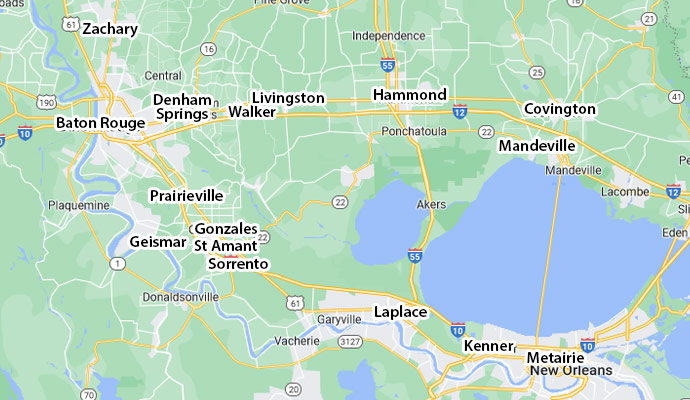
United Fire & Water provides professional mold remediation and mold removal services throughout Greater Baton Rouge, including:
Baton Rouge • Denham Springs • Prairieville • Gonzales • Zachary • Central • Walker • Shenandoah • Port Allen • St. Amant • and surrounding communities.
We also provide restoration services throughout Greater New Orleans, Covington, Mandeville, the Northshore, and other communities across Southeast Louisiana.
Need Mold Remediation in Baton Rouge?
If mold has been identified in your home or commercial property, contact United Fire & Water to discuss the conditions, existing assessment information, and the appropriate next step.
Call 225-401-6568 Request Mold Remediation