Mold Testing in Baton Rouge, LA
If you are concerned about possible mold in your home or business, professional mold testing can provide useful information when sampling is appropriate for the situation. United Fire & Water provides mold testing, air sampling, surface sampling, and moisture investigation services throughout Baton Rouge and surrounding Southeast Louisiana communities.
Mold testing should have a purpose. Simply collecting samples without first understanding the property, moisture conditions, and reason for testing may provide numbers without answering the questions that matter.
That is why we generally begin by understanding the concern and evaluating the property before determining whether mold testing, air sampling, surface sampling, or another form of investigation is appropriate.
Need Mold Testing in Baton Rouge?
If you have a musty odor, previous water damage, suspicious discoloration, concerns about hidden mold, or another reason to investigate indoor mold conditions, contact United Fire & Water.
Call 225-401-6568 Request Mold TestingDo You Actually Need Mold Testing?
Not every mold concern requires laboratory testing.
When visible mold growth is already present, additional sampling may not always be necessary simply to establish that mold exists. Testing is most useful when it is performed to answer a specific question about conditions inside a property.
Examples may include:
- Is suspected material actually fungal growth?
- What types of fungal spores were identified in an air sample?
- Are conditions in one area different from another area of the building?
- Is mold suspected even though no visible growth has been found?
- Could a previous plumbing leak or water loss have created hidden mold-related conditions?
- Would sampling provide useful information for a property transaction or investigation?
- Is additional information needed before deciding what should happen next?
The goal should never be to sell unnecessary samples. The goal is to gather useful information that helps the property owner understand the conditions in the building.
Mold Inspection vs. Mold Testing
People often use the terms mold inspection and mold testing interchangeably, but they are different services.
A mold inspection focuses primarily on the property itself — visible conditions, water intrusion, moisture levels, building materials, musty odors, previous leaks, and areas where concealed moisture or mold may be present.
Mold testing involves collecting samples that are submitted for analysis when sampling is appropriate.
In many situations, the inspection and moisture investigation provide the context necessary to determine whether testing will actually be useful.
That is completely normal. Tell us what you are seeing, smelling, or experiencing with the property, and we can help determine the appropriate starting point.
Types of Mold Testing
Air Sampling
Air samples collect airborne particles from selected areas of a building. Depending on the investigation, an outdoor reference sample may also be collected. Laboratory analysis can identify fungal spores found in the samples and provide information that can be interpreted in the context of the property.
Surface Sampling
Tape-lift or swab samples may be collected from visible or suspicious surfaces. Surface sampling can help identify whether material present on a particular surface contains fungal structures.
Bulk Material Sampling
In certain situations, a small sample of an affected building material may be collected and submitted for laboratory analysis. Examples may include drywall, carpet, or other materials when appropriate.
Targeted Sampling
Testing does not need to involve sampling every room in a house. The sampling strategy should be based on the reason for the investigation, observations made during the inspection, and the questions the testing is intended to answer.
What Can Mold Air Testing Tell You?
Air sampling can provide information about fungal spores captured in the air at a particular location during the sampling period.
Laboratory results may identify different types or groups of fungal spores and report concentrations found in the samples. Those results should be interpreted along with the physical inspection, moisture conditions, building history, weather, indoor conditions, and other relevant factors.
There is not a single universal number that determines whether every home or building has an acceptable or unacceptable level of airborne mold.
For that reason, mold testing should not be treated like a simple pass-or-fail test.
When Mold Testing May Be Helpful
There are many situations where testing can provide useful information.
Musty Odor But No Visible Mold
Sometimes occupants notice a persistent musty odor without seeing visible mold. An inspection should first look for moisture and possible sources of the odor. Depending on what is found, testing may be useful as part of the investigation.
Previous Water Damage
A property may have experienced a plumbing leak, roof leak, appliance failure, flooding, or another water loss months or even years earlier.
If building materials remained wet or were not properly dried, additional investigation may be appropriate when new odors, staining, deterioration, or other concerns develop.
Suspected Hidden Mold
Mold-related conditions may sometimes exist behind drywall, beneath flooring, above ceilings, inside cabinets, around plumbing fixtures, or in other concealed locations associated with moisture.
Moisture investigation and targeted sampling may help determine what additional investigation is warranted.
Buying or Selling a Property
A potential buyer or seller may want additional information when a property has a history of flooding, roof leakage, plumbing failures, visible staining, musty odors, or other indications of previous moisture problems.
Commercial Property Concerns
Property managers and business owners may request testing after roof leaks, plumbing failures, HVAC condensation problems, storm damage, recurring moisture, tenant complaints, or other building-related concerns.
Mold Testing After Water Damage
Mold concerns frequently begin with water.
A pipe may leak behind a wall. An air-conditioning drain may overflow. A roof leak may allow water into a ceiling cavity. An appliance may leak beneath flooring or cabinets.
Even after the obvious source of water has been repaired, moisture can sometimes remain in building materials or concealed spaces.
United Fire & Water has extensive experience investigating water damage and hidden moisture. That building-science and restoration experience is valuable when evaluating a property where suspected mold may be associated with a previous water event.
Moisture Detection Is an Important Part of the Investigation
Mold sampling alone does not identify why a moisture problem developed.
For that reason, mold-related investigations may also involve evaluating the property for moisture and water intrusion.
Depending on the situation, tools may include:
- Professional moisture meters
- Non-invasive moisture detection equipment
- Thermal imaging when appropriate
- Visual inspection of building materials
- Evaluation of areas around plumbing fixtures
- Evaluation of previous water-damage areas
- Inspection of accessible ceilings, walls, flooring, and cabinets
Finding and correcting the source of excess moisture is essential when addressing mold-related building problems.
How Our Mold Testing Process Works
1. We Discuss the Reason for Testing
We begin by understanding what prompted the concern. This may include an odor, previous water loss, visible discoloration, property transaction, plumbing problem, roof leak, or another building-related issue.
2. We Evaluate the Property
Accessible areas of concern are inspected for visible conditions, moisture damage, staining, previous water intrusion, and other information relevant to the investigation.
3. We Determine Whether Sampling Is Useful
If sampling can help answer a meaningful question, an appropriate sampling strategy can be developed based on the conditions and areas being evaluated.
4. Samples Are Collected
Depending on the situation, this may involve air samples, surface samples, or material samples.
5. Samples Are Analyzed
Collected samples are submitted for appropriate laboratory analysis.
6. Findings Are Reviewed
Laboratory results are considered along with observations from the property, moisture conditions, building history, and the reason the testing was performed.
7. You Receive Findings and Recommended Next Steps
We provide the customer with information regarding the assessment and results so the property owner can make an informed decision about what should happen next.
What Happens If Mold Is Identified?
Finding mold does not automatically mean an entire home needs to be torn apart.
The significance of the finding depends on factors including where the mold is located, the amount of material affected, the source of the moisture, the type of materials involved, whether contamination may extend into concealed areas, and other site-specific conditions.
Louisiana has requirements regarding the separation of mold assessment and mold remediation services on the same property. When United Fire & Water performs mold assessment services on a property, we follow applicable Louisiana requirements regarding the services that may subsequently be performed on that property.
Our goal is to clearly explain what was observed and provide useful information so the property owner can determine the appropriate next step.
Residential Mold Testing
United Fire & Water provides mold testing and assessment services for residential properties throughout Greater Baton Rouge.
Common reasons homeowners contact us include:
- Musty smells
- Previous plumbing leaks
- Roof leaks
- Air-conditioning leaks
- Water beneath flooring
- Discoloration on walls or ceilings
- Suspected mold behind walls
- Suspected mold beneath flooring
- Previous flooding
- Humidity and condensation concerns
- Real estate transactions
- Uncertainty about suspicious growth
Commercial Mold Testing
We also provide mold testing and assessment services for commercial and institutional properties.
Properties may include:
- Office buildings
- Apartment and multifamily properties
- Restaurants
- Retail buildings
- Warehouses
- Schools and educational facilities
- Healthcare properties
- Assisted living facilities
- Industrial buildings
- Other commercial properties
Commercial investigations may be especially valuable when there has been a significant roof leak, plumbing failure, HVAC moisture issue, storm event, recurring humidity problem, or water loss affecting multiple areas.
Why Choose United Fire & Water for Mold Testing?
United Fire & Water has served Louisiana property owners since 2005. Our experience extends well beyond collecting a mold sample. We understand how water moves through buildings, how moisture can remain concealed in building materials, and how previous water losses can contribute to long-term property problems.
- Serving Louisiana since 2005
- Extensive water-damage experience
- Residential and commercial property experience
- Professional moisture-detection equipment
- Air and surface sampling capabilities
- Laboratory analysis when appropriate
- IICRC-trained restoration professionals
- Louisiana-licensed mold remediation contractor
- Experience investigating hidden water damage
- Commercial and large-loss property experience
Mold Testing FAQs
How do I know if I need mold testing?
Testing may be useful when there is a specific question that laboratory analysis can help answer. If visible mold is already present, testing may not always be necessary. An inspection can help determine whether sampling would provide useful information.
What is the difference between a mold inspection and mold testing?
A mold inspection evaluates the building for visible mold, moisture, water intrusion, odors, and other relevant conditions. Mold testing involves collecting air, surface, or material samples for laboratory analysis.
Can you test the air for mold?
Yes. Air sampling is one method that may be used when appropriate. Air samples can provide information about fungal spores captured at a particular location and time.
Is there a safe level of mold spores in the air?
There is no single federal pass-or-fail standard for airborne mold concentrations. Results should be evaluated in context with the physical inspection, moisture conditions, building history, and other relevant information.
Can mold testing find mold behind a wall?
Testing alone cannot identify every concealed mold condition. A combination of property inspection, moisture detection, building history, and targeted investigation is often more useful when hidden mold is suspected.
Should I test for mold after a plumbing leak?
Not every plumbing leak requires mold testing. However, if materials remained wet, the extent of the water damage is unknown, or you later notice musty odors, staining, or other suspicious conditions, an inspection may be appropriate.
Do you provide mold testing for businesses and commercial buildings?
Yes. United Fire & Water provides mold testing and mold-related property assessments for residential and commercial properties throughout our service area.
Can United Fire & Water perform mold remediation after performing the mold assessment?
Louisiana requires separation between mold assessment and mold remediation on the same property. United Fire & Water follows applicable Louisiana requirements and will explain the appropriate options based on the services performed.
Mold Testing Throughout Greater Baton Rouge
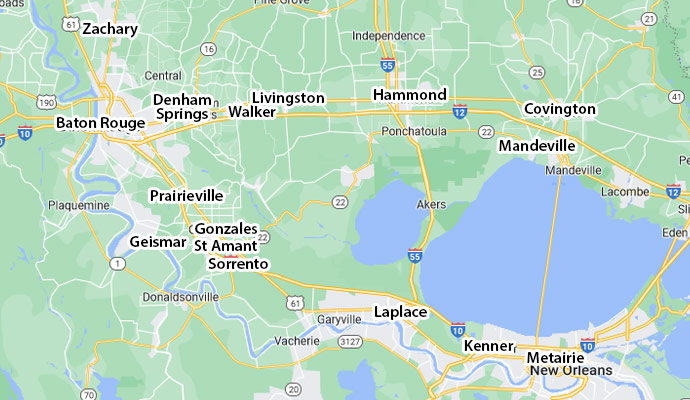
United Fire & Water provides mold testing, mold assessment, and moisture investigation services throughout Greater Baton Rouge, including:
Baton Rouge • Denham Springs • Prairieville • Gonzales • Zachary • Central • Walker • Shenandoah • Port Allen • St. Amant • and surrounding Southeast Louisiana communities.
Schedule Mold Testing or a Mold Inspection
If you are concerned about mold, a musty odor, previous water damage, hidden moisture, suspicious discoloration, a plumbing leak, or a roof leak, contact United Fire & Water.
You don't have to decide whether you need mold testing before you call. Tell us what is happening with the property and we can help determine the appropriate starting point.
Call 225-401-6568 Request Mold Testing