Water Damage FAQs in Baton Rouge, LA
Water damage can create a lot of questions: How quickly should you respond? Can wet flooring be saved? How do restoration professionals find hidden moisture? How long does structural drying take? What happens if mold is discovered? And what information is documented for an insurance claim?
United Fire & Water provides professional water damage restoration for homes and businesses throughout Baton Rouge and Southeast Louisiana. We have compiled answers to many of the questions property owners ask before, during, and after a water loss.
Our services include water extraction, professional moisture detection, structural drying, dehumidification, sewage cleanup, Louisiana-licensed mold remediation, contents services, commercial restoration, and reconstruction.
United Fire & Water has been serving Louisiana since 2005. Emergency property restoration is available 24 hours a day, 7 days a week.
Have Water Damage Right Now?
If a burst pipe, plumbing overflow, appliance leak, roof leak, sewage backup, storm, or another water loss has affected your property, contact United Fire & Water.
Water Damage Emergency FAQs
What should I do first if I discover water damage?
Protect people first. Avoid standing water when electrical, structural, sewage, or other hazards may be present.
If the source is a plumbing leak and the water supply can be shut off safely, stopping additional water can help limit further damage.
Photograph visible damage when conditions are safe and contact a qualified restoration company when water has affected building materials or spread beyond a small, easily controlled area.
How quickly should water damage be addressed?
Water damage should be evaluated as soon as practical. Moisture can migrate underneath flooring, behind baseboards, inside walls, beneath cabinets, into insulation, and into adjoining rooms. Earlier evaluation can help identify affected materials before hidden moisture creates additional problems.
Does United Fire & Water provide 24-hour emergency service?
Yes. United Fire & Water provides 24/7 emergency water damage restoration throughout Baton Rouge and our broader Southeast Louisiana service area.
Should I try to remove standing water myself?
Small amounts of clean water may be manageable under safe conditions, but significant standing water can involve electrical hazards, contaminated water, structural concerns, or hidden moisture. Sewage and potentially contaminated water should be handled with additional precautions.
Water Extraction & Structural Drying FAQs
What is water extraction?
Water extraction is the removal of standing or excess water from a property using professional extraction equipment. Removing excess water is often one of the first steps in a significant water damage restoration project.
What is the difference between water extraction and structural drying?
Water extraction removes standing or excess water. Structural drying addresses moisture that remains within affected building materials after the visible water has been removed. Drying may involve professional air movement, dehumidification, controlled access to wet materials, and ongoing moisture monitoring.
How long does it take to dry a water-damaged property?
There is no single drying time that applies to every property. Drying depends on the amount of water, materials affected, length of exposure, environmental conditions, accessibility, and how the materials respond during restoration. Moisture readings are used to monitor progress rather than relying only on a predetermined number of days.
Why do air movers and dehumidifiers need to run continuously?
Drying equipment is positioned as part of a specific drying plan. Interrupting operation can change drying conditions and slow moisture removal. Property owners should speak with the restoration team before turning equipment off, moving it, or unplugging it.
How do you know when a building is dry?
A surface can feel dry while moisture remains inside or underneath building materials. Restoration technicians use moisture readings, comparison materials, inspection, environmental measurements, and other information to evaluate drying progress.
Hidden Water Damage & Moisture Detection FAQs
How do you find water behind walls or underneath floors?
Restoration technicians may use penetrating and non-penetrating moisture meters, infrared imaging when appropriate, visual inspection, and other moisture-detection methods to help identify affected areas.
Can water travel farther than the visible wet area?
Yes. Water can move through seams, porous building materials, wall cavities, flooring assemblies, cabinets, insulation, and other pathways. The visible puddle or stain may represent only part of the affected area.
What are signs of hidden water damage?
Possible signs include staining, swollen or buckled flooring, peeling paint, soft drywall, damp baseboards, musty odors, changes in cabinetry, unexplained moisture, or visible damage appearing away from the original source.
Floor Water Damage FAQs
Does wet flooring always have to be replaced?
No. Whether flooring can remain depends on the flooring material, source of the water, contamination level, amount of moisture, duration of exposure, installation method, condition of the material, and moisture conditions underneath the floor.
Can hardwood flooring be dried after water damage?
Sometimes. The condition of the wood, amount of absorbed moisture, length of exposure, construction below the flooring, and response during drying all affect whether hardwood can remain.
Can water get underneath tile, vinyl, or laminate flooring?
Yes. Water can migrate beneath many types of finished flooring. The visible surface may appear dry while moisture remains in adhesive, underlayment, subfloor materials, or surrounding construction.
Wet Drywall, Ceilings & Building Materials
Does wet drywall always need to be removed?
Not necessarily. Whether drywall can remain depends on the source and category of water, amount of saturation, material condition, accessibility, length of exposure, and its response during drying.
What happens if insulation gets wet?
The appropriate response depends on the type of insulation, amount and source of water, contamination concerns, accessibility, and material condition. Some wet insulation may need to be removed to properly access and dry the surrounding structure.
Is a sagging wet ceiling dangerous?
A heavily saturated or visibly sagging ceiling may be unstable. Occupants should stay away from compromised ceiling areas until the condition can be safely evaluated.
Water Damage & Mold FAQs
Can water damage lead to mold?
Persistent moisture can create conditions that may support mold growth. This is one reason water extraction, structural drying, humidity control, and moisture monitoring are important following a significant water loss.
Does every water damage project require mold remediation?
No. Mold remediation is not automatically required after every water loss. The appropriate response depends on the conditions found at the property and whether microbial growth is present or requires remediation.
Is United Fire & Water licensed for mold remediation?
Yes. United Fire & Water is a Louisiana-licensed mold remediation company and can provide professional mold remediation when it is required as part of a qualifying property restoration project.
Sewage & Contaminated Water FAQs
Is all water damage treated the same way?
No. The source and condition of the water matter. A clean-water plumbing leak is different from sewage, drain water, or another potentially contaminated water source. Restoration procedures should reflect the conditions encountered during the loss.
What should I do after a sewage backup?
Avoid unnecessary contact with sewage or potentially contaminated water. Keep children, pets, employees, and other occupants away from affected areas and arrange for professional evaluation and cleanup.
Can sewage-damaged materials always be dried and saved?
No. Certain porous materials affected by contaminated water may require removal rather than drying in place. The appropriate procedure depends on the material and conditions of the loss.
Common Causes of Water Damage
Water Damage Insurance FAQs
Does homeowners insurance cover water damage?
Coverage depends on the cause of the water damage and the terms, exclusions, endorsements, limits, and conditions of the individual policy. Property owners should contact their insurance carrier or insurance professional for specific coverage questions.
Does United Fire & Water determine whether my loss is covered?
No. Insurance coverage and policy interpretation are determined by the insurance carrier. United Fire & Water can document the property conditions and restoration work performed.
Should I wait for an insurance adjuster before starting water mitigation?
Property owners should follow the requirements of their individual policy and contact the carrier when appropriate. Significant moisture can continue affecting building materials while a claim is being evaluated, so emergency safety and property-protection concerns should also be addressed.
What information does United Fire & Water document?
Depending on the project, documentation may include photographs, affected areas, moisture readings, drying equipment, material removal, contents services, restoration procedures, and reconstruction work.
Can United Fire & Water communicate with my insurance adjuster?
When authorized, United Fire & Water can provide restoration-related documentation and communicate information about the property conditions and work performed. Insurance coverage decisions remain the responsibility of the insurance carrier.
Water Damage Estimates & Restoration Scope
Can the exact cost of water damage restoration be known immediately?
Not always. The final scope may depend on how far water traveled, which materials are affected, contamination concerns, drying progress, concealed damage, and whether materials can remain or need to be removed.
Why can the restoration scope change after work begins?
Some damage is concealed until flooring, cabinets, walls, ceilings, or other materials can be properly inspected. Moisture readings and conditions discovered during restoration may identify additional affected areas that were not visible initially.
Commercial Water Damage FAQs
Does United Fire & Water handle commercial water damage?
Yes. United Fire & Water provides commercial and large-loss water damage restoration for offices, restaurants, retail properties, multifamily buildings, healthcare facilities, schools, warehouses, industrial facilities, and other commercial properties.
Can you protect inventory and contents during a commercial water loss?
Depending on the project, contents may be protected in place, relocated within the property, inventoried, packed out, cleaned, stored, or otherwise managed as part of the restoration process.
Can you handle large water losses affecting multiple rooms or floors?
Yes. United Fire & Water provides commercial and large-loss restoration services and can deploy professional extraction, drying, dehumidification, moisture-monitoring, contents, and reconstruction resources as required.
Reconstruction After Water Damage
Can United Fire & Water repair my property after it is dry?
Yes. When damaged flooring, drywall, cabinetry, ceilings, insulation, trim, or other building materials must be removed, United Fire & Water can also provide reconstruction and property repairs.
Is reconstruction part of water damage mitigation?
Mitigation and reconstruction are different phases of the restoration process. Mitigation focuses on controlling the damage, removing water, drying the structure, and addressing affected materials. Reconstruction repairs or replaces building materials after mitigation has been completed.
Why Choose United Fire & Water?
Serving Louisiana Since 2005
Extensive experience restoring residential and commercial property damage throughout Southeast Louisiana.
24/7 Emergency Response
Emergency water damage restoration is available day or night.
Moisture Detection
Professional moisture-detection equipment helps identify hidden water damage beyond what can be seen on the surface.
IICRC-Certified Technicians
Trained restoration professionals use professional extraction, drying, and monitoring procedures.
Licensed Mold Remediation
Louisiana-licensed mold remediation is available when remediation is necessary.
Mitigation Through Reconstruction
United Fire & Water can manage mitigation, contents services, structural drying, and subsequent repairs.
Water Damage Restoration Across Southeast Louisiana
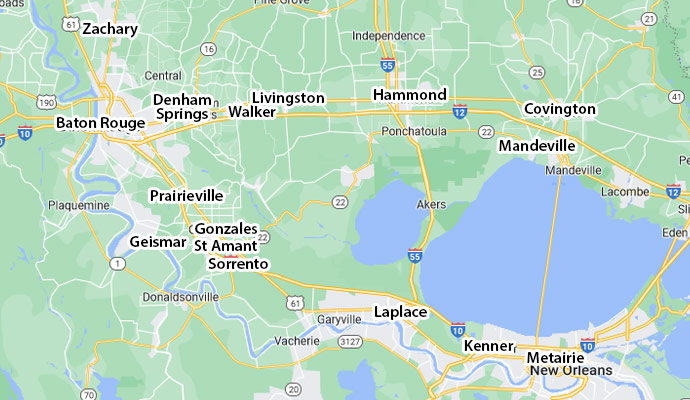
United Fire & Water provides water damage restoration throughout Greater Baton Rouge, Greater New Orleans, the Northshore, and surrounding Southeast Louisiana communities.
Still Have a Water Damage Question?
If your home or business has experienced water damage from a pipe break, plumbing overflow, appliance leak, slab leak, roof leak, sewage backup, storm, or another source, contact United Fire & Water.
Emergency water damage restoration is available 24 hours a day, 7 days a week.