Water Damage Restoration Equipment in Baton Rouge, LA
Professional water damage restoration requires more than removing the water you can see. United Fire & Water uses professional water extraction, moisture detection, air movement, dehumidification, air filtration, and drying equipment to restore water-damaged homes and businesses throughout Baton Rouge and Southeast Louisiana.
The equipment used on a water loss depends on the source of the water, amount of moisture, affected materials, size of the property, contamination concerns, environmental conditions, and the drying objectives for the project.
A small plumbing leak may require a very different setup from a multi-room water loss, commercial pipe failure, sewage backup, storm-related loss, or large commercial project.
United Fire & Water has been serving Louisiana since 2005. Emergency water damage restoration is available 24 hours a day, 7 days a week.
Have Water Damage in Your Home or Business?
United Fire & Water can evaluate the affected areas, identify hidden moisture, remove excess water, establish appropriate drying conditions, and monitor the property throughout restoration.
Why Professional Restoration Equipment Matters
Visible standing water is only one part of a water loss. Moisture can travel underneath flooring, behind drywall, into insulation, beneath cabinets, inside wall cavities, and into other porous building materials.
Professional restoration equipment is used to help accomplish several different objectives:
✓ Remove standing and excess water
✓ Locate hidden moisture
✓ Promote evaporation from wet materials
✓ Remove moisture from the air
✓ Control airflow
✓ Filter airborne particles
✓ Monitor drying progress
✓ Establish controlled work areas when needed
The equipment itself is only part of the process. Proper placement, monitoring, adjustment, and moisture measurement are what turn equipment into an effective drying system.
Professional Water Damage Equipment We Use
Air Movers
Professional air movers create controlled airflow across wet surfaces to increase evaporation.
They may be positioned near flooring, walls, cabinets, structural materials, or access openings depending on the drying plan.
Commercial Dehumidifiers
Dehumidifiers remove moisture from the air as water evaporates from wet building materials.
Controlling humidity helps maintain effective drying conditions throughout the affected environment.
Air Scrubbers
Air scrubbers filter airborne particles during certain restoration procedures.
They may be used during demolition, cleaning, mold remediation, sewage restoration, or other projects where airborne particulate control is appropriate.
Negative-Air Equipment
Negative-air machines may be used with containment to help control airflow between affected and unaffected areas.
This can be particularly useful during controlled demolition, mold remediation, contaminated-water cleanup, and certain complex restoration projects.
Water Extraction Equipment
Professional extraction equipment removes excess water before structural drying begins.
Removing liquid water efficiently can reduce the amount of moisture that must later be removed through evaporation and dehumidification.
Moisture Detection Equipment
Professional moisture meters and other inspection tools help determine which materials are affected and how far water has traveled.
Moisture readings are also used to track drying progress throughout the project.
How Air Movers Help Dry Water-Damaged Materials
Air movers do not simply “blow the water away.” They are positioned to create airflow across wet building materials and encourage moisture to evaporate from those materials into the air.
Placement may be adjusted depending on the location and type of wet materials. Airflow can be directed toward flooring, walls, structural framing, cabinets, or controlled access openings.
On larger losses, multiple air movers may be strategically placed throughout several affected rooms.
Why Dehumidifiers Are Important During Structural Drying
As air movers encourage moisture to leave wet materials, that moisture enters the surrounding air.
Commercial dehumidification equipment removes moisture from the air and helps maintain conditions that support continued evaporation.
Air movement and dehumidification therefore work together as part of the structural drying process.
The number and type of dehumidifiers used depend on the size of the affected area, amount of moisture, building materials, environmental conditions, and other project-specific factors.
What Does an Air Scrubber Do?
An air scrubber moves air through filtration media to capture airborne particles.
Air filtration may be appropriate when restoration activities disturb drywall dust, insulation, construction debris, microbial particles, or other airborne contaminants.
Air scrubbers are commonly used in combination with containment and controlled demolition during certain restoration projects.
Containment & Negative-Air Equipment
Some restoration projects require the affected work area to be separated from surrounding occupied or unaffected spaces.
Temporary containment barriers may be installed around the work area, and negative-air equipment can be used to control airflow within that contained space.
These procedures may be appropriate during mold remediation, sewage restoration, demolition of affected materials, and other projects where controlling dust or airborne particles is important.
Moisture Detection Is Just as Important as Drying Equipment
Water-damaged materials may appear dry on the surface while retaining moisture underneath.
United Fire & Water uses professional moisture-detection equipment to help evaluate:
✓ Hardwood and laminate flooring
✓ Carpet and subfloor areas
✓ Drywall and baseboards
✓ Cabinets and toe kicks
✓ Ceilings and insulation
✓ Wall cavities
✓ Adjacent rooms
✓ Other affected structural materials
Moisture readings can be compared over time to evaluate whether affected materials are responding to the drying plan.
Every Water Damage Project Requires a Different Equipment Setup
There is no standard number of air movers, dehumidifiers, or other machines that should automatically be placed on every water loss.
Equipment needs depend on factors such as:
✓ Amount of water released
✓ Number of affected rooms
✓ Type of building materials
✓ Size of the affected area
✓ Water source and contamination concerns
✓ Indoor temperature and humidity
✓ Accessibility of wet materials
✓ Commercial vs. residential construction
✓ Moisture readings
✓ How materials respond during drying
Restoration technicians can adjust the equipment configuration as drying progresses and moisture conditions change.
Real Water Damage Equipment Use in Baton Rouge
United Fire & Water routinely uses different combinations of professional drying, filtration, and moisture-monitoring equipment based on the conditions encountered at Baton Rouge water damage projects.
Multi-Room Water Damage
On one Baton Rouge water-loss project, moisture affected the bathroom subfloor, ceiling below, kitchen ceiling, and wood flooring.
The drying plan used multiple air movers, commercial dehumidifiers, air scrubbers, and professional moisture monitoring across the affected areas.
Targeted Wall-Cavity Drying
Another Baton Rouge water-loss project required professional moisture detection, multiple air movers, commercial dehumidification, and air filtration.
Small controlled access openings were created in drywall to allow airflow into wet wall cavities and improve drying conditions.
Slab Leak Drying
On a separate Baton Rouge slab-leak project, commercial dehumidifiers and air scrubbers were deployed throughout affected areas while moisture readings were monitored to track drying progress.
These examples demonstrate why professional restoration involves evaluating the actual property conditions instead of simply placing the same equipment on every project.
Why Drying Equipment Must Be Monitored
Installing drying equipment is not the end of the restoration process.
Technicians may return during drying to take moisture readings, evaluate environmental conditions, reposition equipment, remove equipment that is no longer needed, or adjust the drying plan.
The goal is not to operate equipment for a predetermined number of days. The goal is to evaluate the condition of the affected materials and monitor their progress toward appropriate drying objectives.
Should You Turn Off Water Damage Drying Equipment?
Property owners should speak with the restoration team before unplugging, moving, or turning off air movers, dehumidifiers, air scrubbers, or other restoration equipment.
Equipment is positioned as part of the drying or containment plan. Interrupting operation can change the environmental conditions and potentially slow the drying process.
If equipment is creating a problem, contact United Fire & Water so the setup can be evaluated rather than changing it without guidance.
Equipment for Floor Water Damage
Water can become trapped beneath hardwood, laminate, vinyl, carpet, tile assemblies, and other flooring materials.
Moisture-detection equipment helps determine whether water has migrated below the visible surface. Air movement, dehumidification, selective material removal, and other drying procedures may then be used according to the flooring material and conditions found.
Not every wet floor must automatically be removed. The appropriate procedure depends on the material, source of water, saturation, exposure time, installation method, and how the floor responds during drying.
Equipment Used During Sewage & Contaminated Water Cleanup
Sewage and other contaminated-water losses require additional considerations beyond drying.
Depending on conditions, restoration may involve containment, negative-air equipment, air filtration, extraction equipment, cleaning and sanitizing procedures, removal of contaminated porous materials, and structural drying.
The source and condition of the water determine which procedures are appropriate.
Restoration Equipment & Mold Remediation
Persistent moisture can create conditions that may support mold growth.
When mold remediation is necessary, specialized containment, negative-air equipment, HEPA filtration, cleaning procedures, and moisture control may be incorporated into the remediation process.
United Fire & Water provides professional Louisiana-licensed mold remediation for qualifying property restoration projects.
Commercial Water Damage Restoration Equipment
Commercial water losses can require significantly more equipment and logistical planning than smaller residential projects.
Large commercial spaces may involve multiple rooms, floors, tenants, departments, inventory, structural assemblies, and extensive quantities of wet materials.
United Fire & Water can deploy commercial water extraction, air movement, dehumidification, air filtration, containment, moisture-monitoring, contents, and restoration resources according to the size and complexity of the project.
✓ Office buildings
✓ Apartment and multifamily properties
✓ Restaurants and retail
✓ Healthcare facilities
✓ Schools and institutions
✓ Warehouses
✓ Industrial properties
✓ Large commercial facilities
Related Water Damage Services
Why Choose United Fire & Water?
Serving Louisiana Since 2005
Extensive experience restoring residential and commercial property damage throughout Southeast Louisiana.
24/7 Emergency Response
Emergency water damage restoration is available day or night.
Professional Equipment
Commercial extraction, drying, filtration, containment, and moisture-monitoring equipment are deployed as needed.
IICRC-Certified Technicians
Trained restoration professionals evaluate equipment placement and monitor structural drying.
Licensed Mold Remediation
Louisiana-licensed mold remediation is available when remediation is necessary.
Mitigation Through Reconstruction
United Fire & Water can manage mitigation, structural drying, contents services, and subsequent repairs.
Water Damage Restoration Across Southeast Louisiana
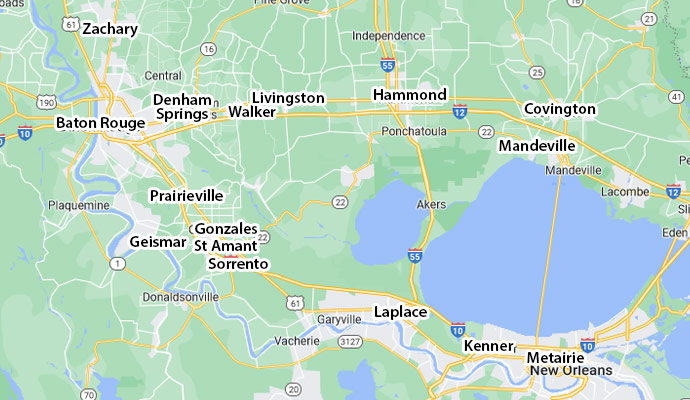
United Fire & Water provides professional water damage restoration throughout Greater Baton Rouge, Greater New Orleans, the Northshore, and surrounding communities.
Water Damage Restoration Equipment FAQs
What equipment is used to dry a water-damaged home?
Depending on the loss, restoration equipment may include water extraction equipment, air movers, commercial dehumidifiers, air scrubbers, negative-air machines, moisture meters, and other specialized equipment.
What does an air mover do?
Air movers create controlled airflow across wet building materials to encourage moisture to evaporate from those materials into the surrounding air.
What does a dehumidifier do during water damage restoration?
Commercial dehumidifiers remove moisture from the air and help maintain environmental conditions that support structural drying.
What is an air scrubber?
An air scrubber moves air through filtration media to capture airborne particles. Air scrubbers may be used during demolition, mold remediation, sewage cleanup, and other restoration procedures.
Why is negative-air equipment used?
Negative-air equipment can help control airflow within a contained work area and may be used during demolition, mold remediation, contaminated-water cleanup, and other specialized restoration procedures.
How do you know how much drying equipment is needed?
Equipment requirements depend on the amount of water, size of the affected area, building materials, environmental conditions, water source, moisture readings, and how materials respond during drying.
Should I turn off the drying equipment at night?
Property owners should speak with the restoration team before turning off, unplugging, or moving drying equipment. Interrupting operation can affect the drying conditions.
How do you know when water-damaged materials are dry?
Restoration technicians use moisture readings, inspections, environmental measurements, comparison materials, and other information to evaluate drying progress rather than relying only on how a surface looks or feels.
Does United Fire & Water provide 24-hour water damage restoration in Baton Rouge?
Yes. United Fire & Water provides 24/7 emergency water damage restoration throughout Baton Rouge and surrounding Southeast Louisiana communities.
Need Professional Water Damage Restoration?
If water has affected flooring, drywall, ceilings, cabinets, insulation, contents, or other areas of your home or business, contact United Fire & Water.
Our technicians use professional moisture detection, water extraction, air movement, dehumidification, air filtration, and structural drying equipment according to the conditions of the loss.
Emergency water damage restoration is available 24 hours a day, 7 days a week.